
CASE STUDY
Matthew Barnett Howland with Dido Milne and Oliver Wilton
Matthew Barnett Howland (assisted by M&P London Contractors Ltd)
Telephone: 01993 833155
Designed as a response to modern architecture’s impact on biodiversity and climate change, Cork House has won multiple awards including the RIBA South Award 2019, RIBA South Sustainability Award 2019 and RIBA National Award 2019 for the way it fuses ancient construction methods with cutting-edge design to create a sustainable living solution whose whole-life carbon is 85% less than a traditional new build house.
The ‘whole-life approach’ to sustainability was encompassed by the design team – Matthew Barnett Howland, Dido Milne and Oliver Wilton who designed, tested and developed this striking architecture in partnership with The Bartlett School of Architecture UCL. Cork House is built almost entirely from sustainably sourced cork blocks.
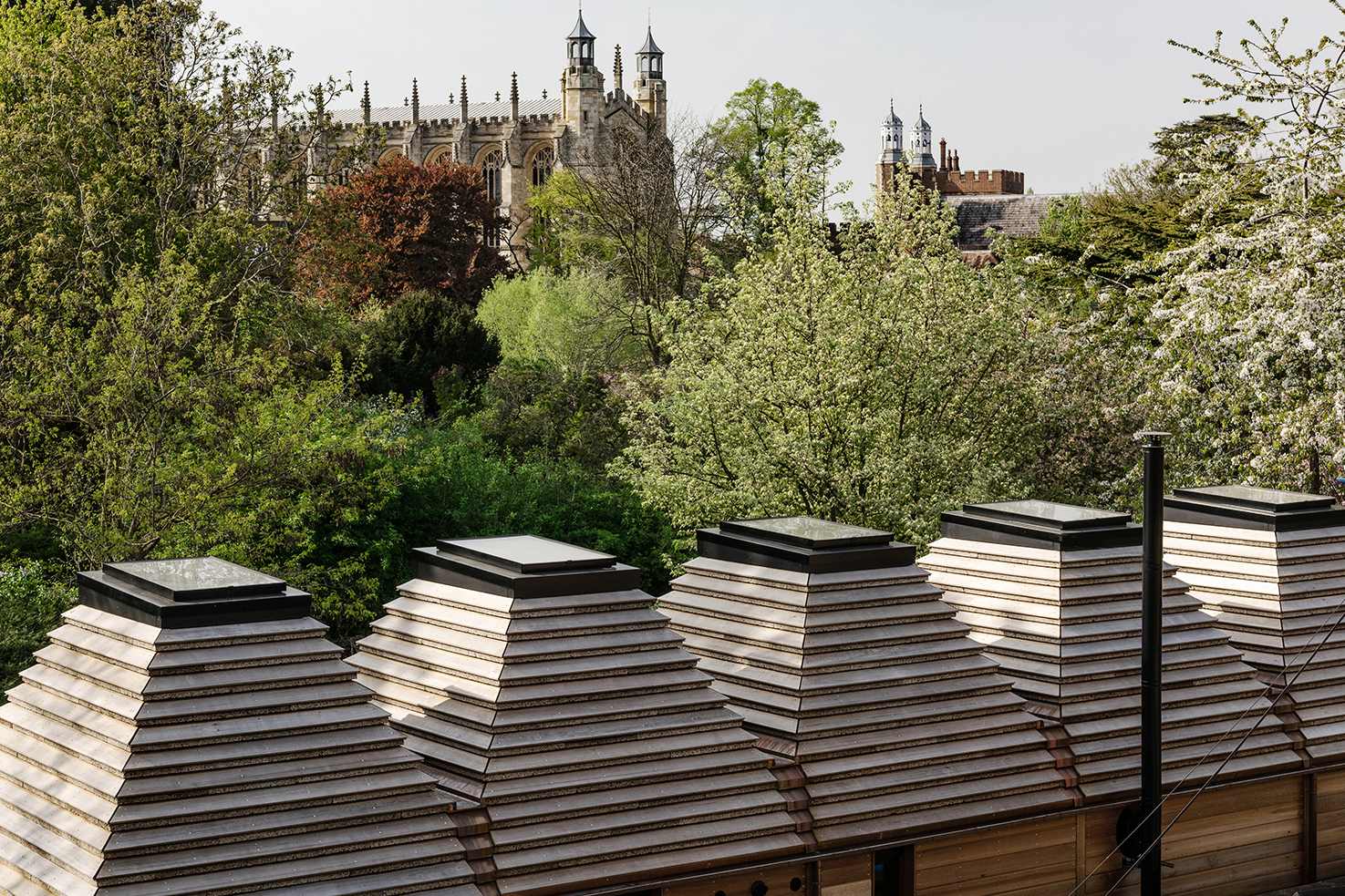
Our tailormade Conservation Plateau Rooflights provided a juxtaposition to the dark cork walls creating a stunning light and dark effect. The motorised opening option fits the bill perfectly to provide ventilation and regulate heat in the building. The result is a beautiful and individual building, which nestles sustainably into its surroundings on the banks of the River Thames.
Photography and Videography by Phil Broom, Ricky Jones and Magnus Dennis.
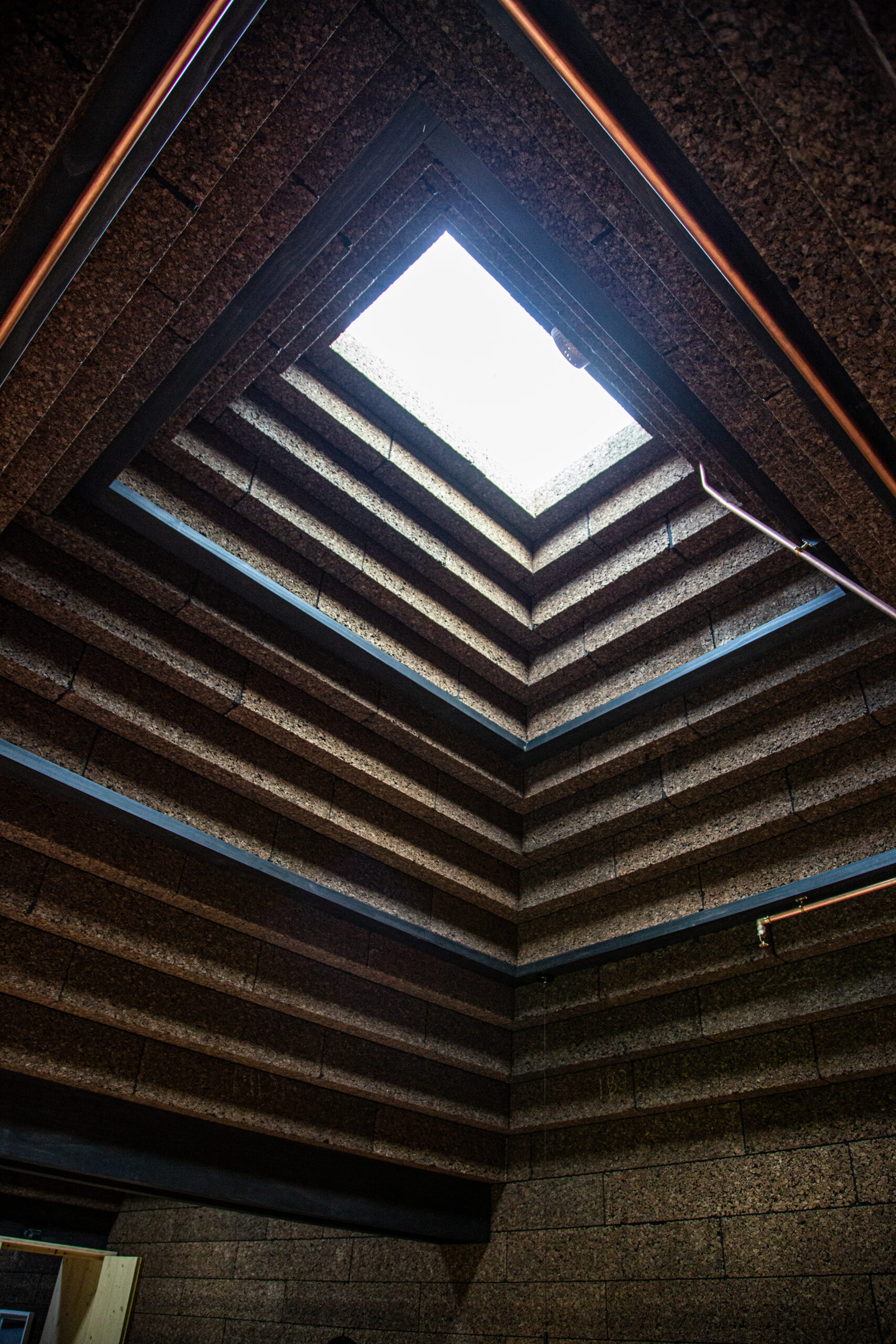
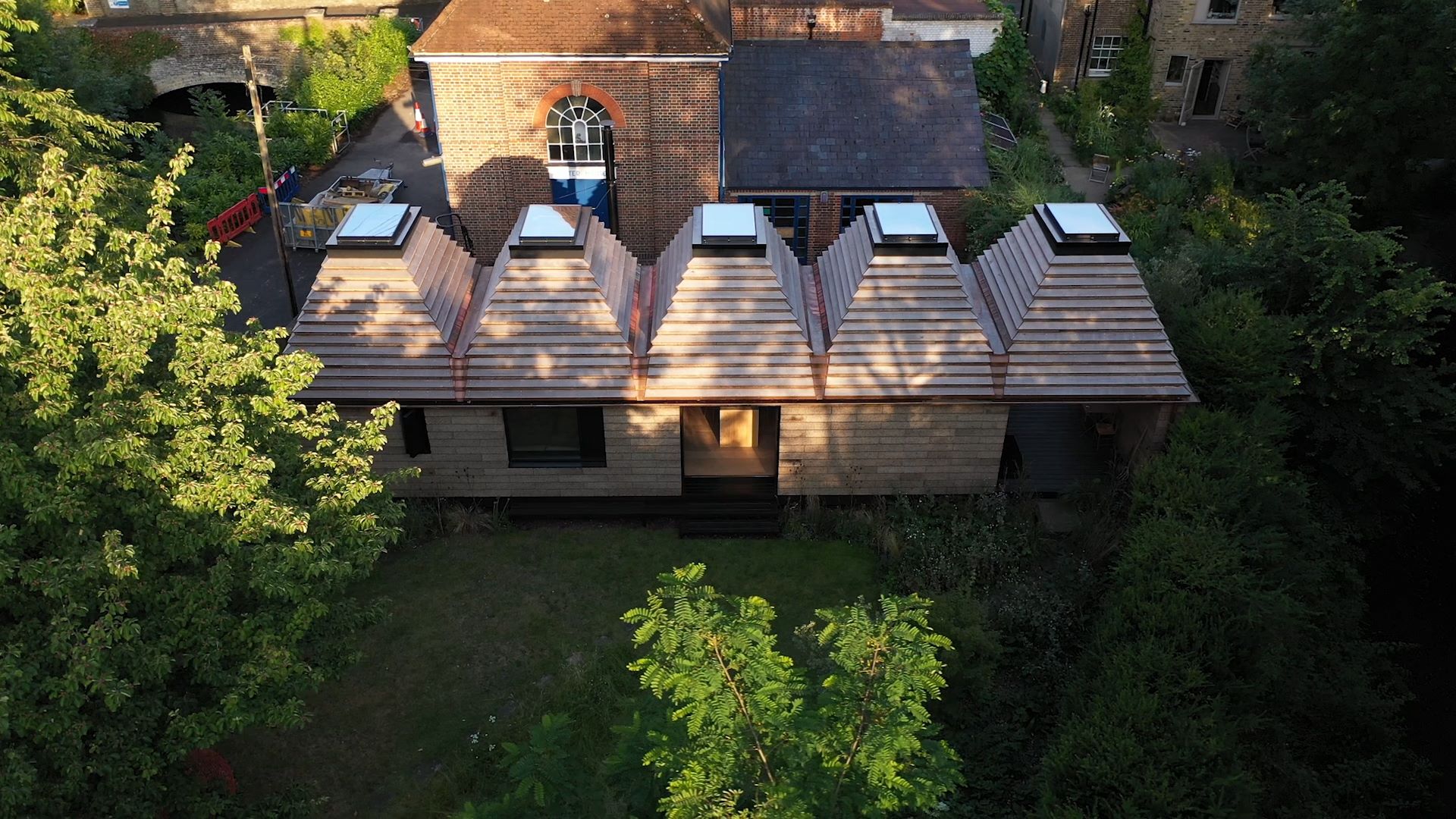
This gallery would highlight the monolithic cork construction, the sculptural corbelled roofs, dramatic top-lit interiors and the elegant contrast of light rooflights set within dark cork structures.
Award-winning Cork House fuses ancient construction methods with cutting-edge design to create a sustainable living solution whose whole-life carbon is 85 percent less than a typical comparable new-build house.
Located within the grounds of a Grade II listed Mill House in Eton, Berkshire, Cork House is a collaborative design project from Matthew Barnett Howland, Dido Milne and Oliver Wilton. The monolithic walls and corbelled roofs are built almost entirely from solid load-bearing cork. Designed as a response to modern architecture’s impact on biodiversity and climate change, the house not only resembles beehives in its design but is similarly constructed using a single bio-renewable material for both walls and roofs.
Developed in partnership with The Bartlett School of Architecture UCL, Cork House is built almost entirely from sustainably sourced cork blocks and supported by timber components, without the use of cement, glue, plastic insulation, plaster or render. As well as blending seamlessly into its surroundings, the house is designed to be easily dismantled, reused or recycled.
Our bespoke Conservation Plateau Rooflights provided a striking juxtaposition to the dark cork walls, creating a dramatic light-and-shadow effect. However, they also performed a structural function unique to the design of Cork House.
Built using a dry-jointed system, with its stability relying solely on its self-weight, the structure required a “paperweight” to hold the cork blocks together. This is where the rooflights offered an innovative dual function. Instead of sitting over a conventional timber kerb, the rooflight baseplate was designed to slot over the top cork block itself.
Not only does the rooflight installation create a weathertight seal, it also acts as a structural weight for the cork blocks beneath. The baseplate was also critical to the design due to the thickness of the cork walls. The brief required glazing only over the internal opening, meaning the skirt became a crucial part of the weathering detail.
The rooflights also performed a conventional purpose. Sitting at the top of the pyramid structures, they create a stacked ventilation system. The motorised opening option was perfectly suited to regulate heat and provide ventilation throughout the building.
A challenge of building with cork is its tendency to absorb both light and sound. By placing rooflights strategically, the interior is flooded with light from above, bouncing off the floorboards and reflecting back into the space. The toplighting throws the three-dimensional form of the cork into strong relief, creating a sequence of dramatic light and dark steps.
With form, function and environmental footprint equally prioritised, it is no surprise that Cork House has received widespread recognition. The project won the Stephen Lawrence Prize in 2019 and was shortlisted for the RIBA Stirling Prize among numerous other awards. Its “whole life” approach to sustainability means the house was carbon-negative at completion and will maintain extremely low whole-life carbon over time.
The result is a beautiful, distinctive and deeply sustainable home that settles harmoniously into its riverside surroundings. The multitude of awards bestowed on the project is a testament to the ingenuity and creativity of the architectural team.
• RIBA South Award 2019
• RIBA South Sustainability Award 2019
• RIBA National Award 2019
• Stephen Lawrence Prize 2019
• RIBA President’s Award for Research 2019
• RIBA House of the Year 2019 – Longlist
• RIBA Stirling Prize 2019 – Shortlisted
• Dezeen Award 2019 – Longlisted
• The Manser Medal
• AJ House of the Year 2019
• EU Mies van der Rohe Award 2022 – Nominee
• AIA Region Design Awards 2020 – Honor Award
• AIA Design Awards 2020 – Sustainability & Professional categories
• Architecture Masterprize 2020 – Best of Best in Green Architecture
• Wood Awards 2019 – Gold Award
• Structural Timber Awards 2020 – Private Housing Project of the Year
• Sunday Times British Homes Awards 2019 – Small House of the Year (Shortlist)
• Offsite Awards 2020 – Best Use of Timber Technology (Finalist)
Share
Meet the experts behind this project – our dedicated team who brought this vision to life.

Passionate about properties of distinction, Phil understands the delicate balance between preserving the integrity of historic buildings and delivering high-quality, high-performing natural top lighting solutions. With exacting standards, Phil recognises that prestigious properties require not only superior products but also a bespoke service that supports every stage of the project. Collaborating closely with our Design Engineers, Phil advises on some of our most complex and highly confidential projects, where discretion and sensitivity are paramount both nationally and internationally.

Kathryn is a skilled Design Manager who combines creative thinking with practical engineering insight. Grounded in realistic and achievable design principles, she brings clarity and innovation to even the most complex rooflight challenges. Passionate about delivering exceptional results, Kathryn is committed to ensuring your specification requirements are not only met—but exceeded. With extensive knowledge and hands-on experience in natural toplighting solutions, she is a trusted partner throughout the design process. Her approach ensures that every solution is thoughtfully designed, high-performing, and tailored to the unique needs of your project.

Our standard terms and conditions of sale provide a warranty of 12 months from date of delivery. We recommend you register your products within this timeframe to extend your warranty, where applicable.
I agree for my data provided on the form submission to be sent to CD Blinds Ltd and stored by CD Blinds Ltd only for the purposes of consulting on shading solutions.
I agree for CD Blinds Ltd to contact me using the contact information I have provided on the form submission for shading consultation purposes.
I understand that I can easily withdraw consent at any time by contacting CD Blinds Ltd via email to info@cdblinds.co.uk.
CD Blinds Ltd will interact with you under their terms of service.
By using their services, you agree to be bound by the CD Blinds terms of service located here https://www.cdblinds.co.uk/privacy-policy/.
If you have any questions about the terms, please email us at shading@therooflightco.com.
We invite you to complete the fields below and a member of our technical sales team will be in touch.